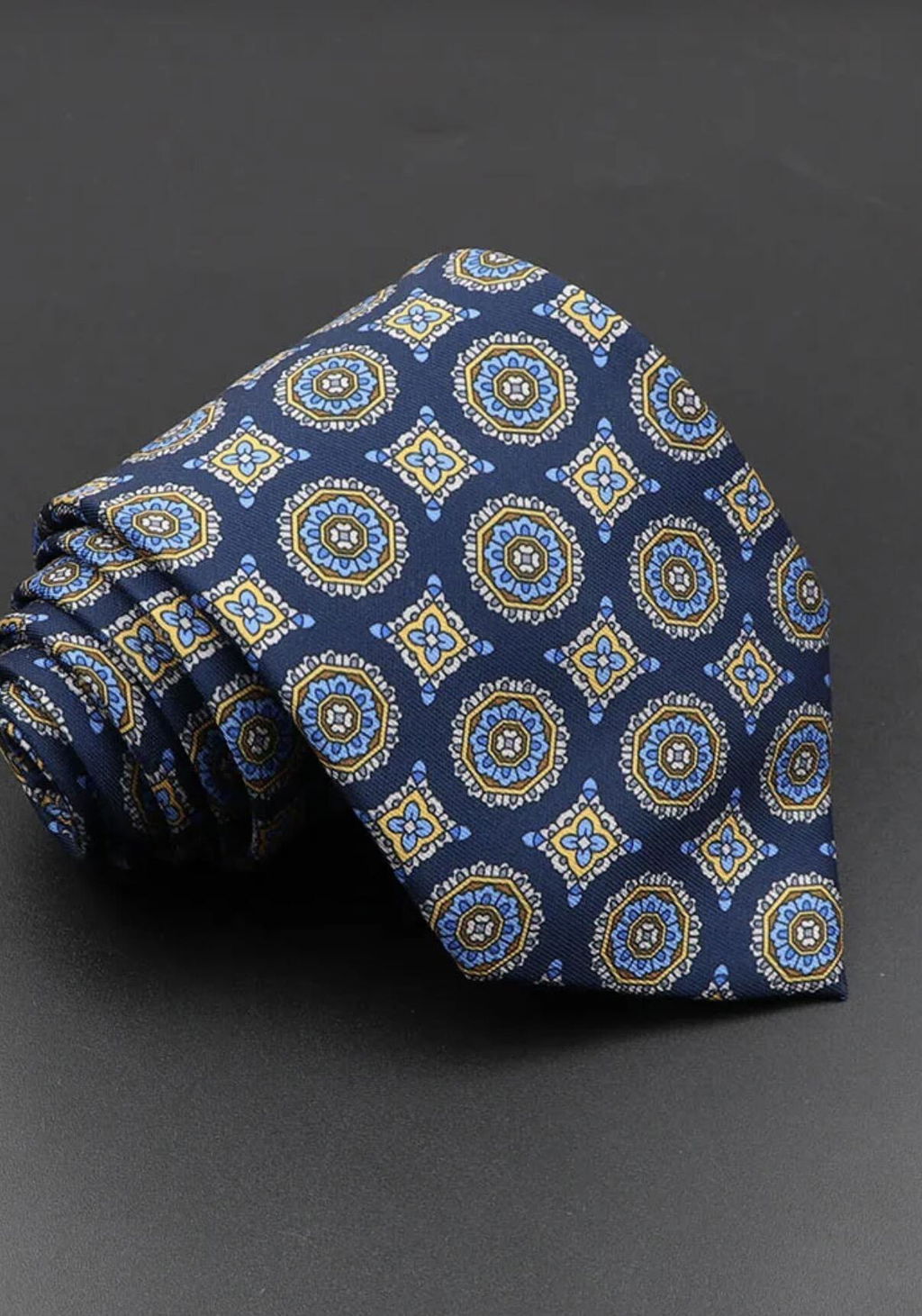
Silk vs. Polyester vs. Wool Ties: Which Tie Material Should You Choose?
Introduction
The material your tie is made from shapes everything—its sheen, how the knot sits, how it drapes, which season it suits, and how long it lasts. If you've ever wondered whether to buy silk, polyester, or wool ties, this complete buyer's guide compares every common tie fabric side by side, so you can match the right material to the right occasion with confidence.
Silk Ties: The Timeless Standard
Silk is the benchmark against which every other tie material is judged—and for good reason. It offers a soft, natural sheen, a fluid drape, and a crisp, refined knot that holds its shape.
- Best for: Weddings, business, formal events, and anytime you want to look polished.
- Look: Elegant luster that catches light beautifully.
- Season: Year-round, with lighter weaves for summer.
- Care: Spot clean only; never machine wash.
A handmade silk tie—cut on the bias and hand-finished—drapes and knots far better than a fused, mass-produced one. Explore the full collection of handmade silk ties to see the difference quality construction makes.
Polyester & Microfiber Ties: Affordable and Practical
Polyester is the most budget-friendly option and has improved dramatically—modern microfiber ties can mimic silk's appearance at a glance.
- Best for: Everyday wear, uniforms, and situations where durability and stain resistance matter.
- Look: Can appear slightly more matte or, in cheaper versions, overly shiny.
- Season: Year-round, though less breathable in heat.
- Care: Highly stain-resistant and forgiving.
The trade-off: polyester lacks the depth, drape, and longevity of natural silk, and the knot rarely sits as cleanly. It's a sensible starter or backup tie, but not a lifetime piece.
Wool Ties: Texture and Warmth
Wool ties bring matte texture and visual depth that silk can't replicate—perfect for cooler months and more relaxed, tactile outfits.
- Best for: Autumn and winter, smart-casual looks, tweed and flannel suits.
- Look: Matte, substantial, with a cozy, approachable feel.
- Season: Fall and winter.
- Care: Spot clean; store rolled to protect the shape.
Wool and knit ties pair especially well with textured and casual ensembles, adding dimension to a plain shirt and blazer.
Cotton Ties: Casual and Crisp
Cotton sits between silk and wool in formality—matte, lightweight, and relaxed.
- Best for: Spring and summer, daytime events, and casual offices.
- Look: Clean and understated with little sheen.
- Season: Warm months.
- Care: More forgiving than silk; some can be gently pressed.
Linen Ties: Effortless Summer Style
Linen is the lightest, most breathable option—made for heat and informality.
- Best for: Summer weddings, garden parties, and beach-adjacent events.
- Look: Textured and matte, with characteristic (and intentional) wrinkles.
- Season: Peak summer.
- Care: Embrace the relaxed, slightly creased look.
Quick Comparison
- Most versatile & refined: Silk.
- Most affordable & durable: Polyester.
- Best for cold weather: Wool.
- Best for warm, casual days: Cotton and linen.
For help translating material into a finished outfit, see our guide on how to choose the perfect necktie for every occasion.
How to Tell a Quality Tie From a Cheap One
Material matters, but construction matters just as much. Look for a tie cut on the bias (it returns to shape and knots evenly), a slip stitch running down the back, hand-rolled or self-tipped edges, and a natural interlining that gives the tie body. These hallmarks separate a tie that lasts years from one that bubbles and frays. Learn more in our breakdown of handmade vs. machine-made ties.
Frequently Asked Questions
Are silk ties better than polyester?
Generally, yes. Silk offers a richer sheen, better drape, a crisper knot, and greater longevity. Polyester is cheaper and more stain-resistant but lacks silk's depth and refinement.
What tie material is best for a wedding?
Silk is the top choice for weddings thanks to its elegant luster and clean knot. Satin suits evening weddings, while linen works for summer or outdoor celebrations.
Which tie material is best for winter?
Wool ties are ideal for cold weather—their matte texture and warmth complement tweed, flannel, and heavier suiting.
How can I tell if a tie is high quality?
Check for a bias cut, a slip stitch on the back, hand-rolled or self-tipped edges, and a natural interlining. These signal durable, well-made construction regardless of fabric.
Conclusion
There's no single best tie material—only the best material for the moment. Reach for silk when you want timeless polish, wool when the weather turns cold, and cotton or linen for relaxed warm-weather looks. Whatever the occasion, quality construction is what makes a tie worth wearing. Browse the handmade Talisman collection and choose a tie built to last.